Showing posts with label physical. Show all posts

Thursday, January 31, 2013

5 Typical Mistakes with Gold Investments

Axel Merk has published a new whitepaper entitled "Fools Gold: Five
Common Mistakes with Gold Investment" that deals with poor Gold investments decision or understanding.

5 investment advices are summarized below:
  1. Gold Stocks Ain’t Gold - Gold mining stocks, on aggregate, have significantly underperformed the price of gold.
  2.  There is Only One Real Thing - Other precious metals, including silver, may not perform as well as gold in times of economic duress.
  3. Beware of Premium Over Spot - Make a note of the spot price of gold per Troy ounce, so that you can calculate the premium the dealer is asking for (be sure to include any delivery, administrative, insurance, or related fees) before making a final decision
  4. Don’t Overlook the Expenses - Before you buy physical gold, you have to carefully consider the related storage and insurance costs.
  5. Make Sure Gold is Really There -  If you buy a Gold ETF make sure to read the prospetus, and be wary of large amount of "unallocated gold", and the ability to lease gold.

The full report is available for download on Merk Funds website.

Sunday, August 7, 2011

Physical ETF vs Synthetic ETF

The Hong Kong Exchanges and Clearing Limited provides a List of ETFs and Trading Arrangements of ETFs (Excel Format) that can be purchased on the Hong Kong stock market.

However, I noticed that they classified the ETFs in two categories:
  • Physical ETFs
  • Synthetic ETFs
So what's the differences between the two and the advantages and inconveniences of those types of ETF.

A Physical ETF simply owns the entities of an Index. For example, a physical ETF tracking the CAC 40 would simply hold shares of all 40 companies listed in this Index. The main advantage is that there is no counter-party risk, but should have to subtract cost and other inefficiencies to the ETF returns.

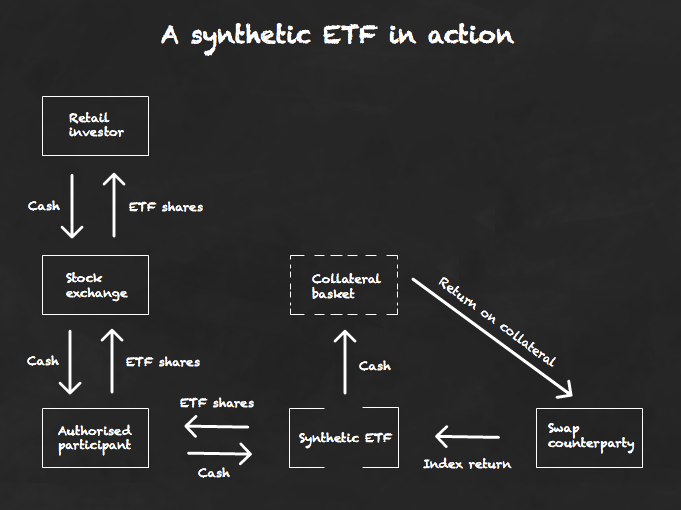
A Synthetic ETF is composed of total return swaps (financial derivatives) where a counter-party pays the exact return of the Index. Such products provides better returns since they allow to reduce the cost (reduce tracking errors) compared to the cost of physical ETF but they entail counter-party risk.

The diagram below explains how a Synthetic ETF actually works (Source: Moneyvator blog).

I recommend you read the following blog post if you need further details about Synthetic ETFs, especially to better understand the counter-party risks and understand what may happen if the swap provider goes bankrupt.